
Why Setting Boundaries (or Breaking Old Patterns) Feels So Hard: The Role of a Dysregulated Nervous System
If you’ve ever tried to set a boundary or stop falling into the same old patterns and found yourself freezing, panicking, or immediately slipping back into people-pleasing, you’re not alone.
Many people think difficulty with boundaries is a “personality flaw,” a lack of confidence, or a sign that they’re “too sensitive.”
But from a therapeutic lens?
It’s almost always about the nervous system.
As a therapist, I see this every day: you know what the healthy choice is… but your body goes into survival mode before you can follow through. And until you understand what your body is doing and why boundaries will feel impossible.
Let’s break down why.

A woman seated on a couch looking at her phone, symbolizing emotional reflection, boundary challenges, and the internal experience of stress and nervous system dysregulation. This image supports a blog discussing why setting boundaries feels difficult and how therapy can help regulate the nervous system.
Your Nervous System Shapes Your Boundaries
Your nervous system isn’t just about stress, it shapes how safe or unsafe you feel in relationships, conflict, conversations, and emotional closeness.
When your nervous system is dysregulated, it becomes harder to:
say “no” even when you need to
express a feeling without shutting down
stop people-pleasing
trust your own internal cues
stand firm when someone pushes a limit
Why?
Because a dysregulated nervous system interprets boundary-setting as danger, even when you’re safe.
The science behind this is grounded in polyvagal theory, which explains how the vagus nerve influences feelings of safety and connection.
Why Your Body Resists Boundary-Setting
When you try to set a boundary, your body might respond with:
a racing heart
guilt or panic
freezing
dissociation
over-explaining
shutting down
This happens because your body learned often early in life that:
conflict meant danger
anger meant rejection
saying no meant punishment
your needs weren’t welcome
belonging depended on being easy, agreeable, or quiet
These patterns are nervous system responses, not personal failures.
If your body has only ever felt safe when you’re accommodating, self-abandonment becomes a survival strategy.
People Don’t Struggle With Boundaries Because They’re Weak
People struggle because their nervous system is doing its job: trying to keep them safe based on old information.
Research shows that chronic stress, childhood emotional neglect, trauma, and relational instability all shape nervous system functioning.
What Boundary Struggles Look Like in Real Life
You may notice patterns like:
Saying “it’s fine” when it’s not
Overthinking your needs
Avoiding hard conversations
Feeling responsible for everyone’s emotions
Being physically uncomfortable saying no
Fear that asserting yourself will push people away
These aren’t random behaviors, they’re nervous system adaptations.
Your body learned these strategies to survive environments where your needs weren’t welcomed.
Now, as an adult, they’re keeping you stuck.
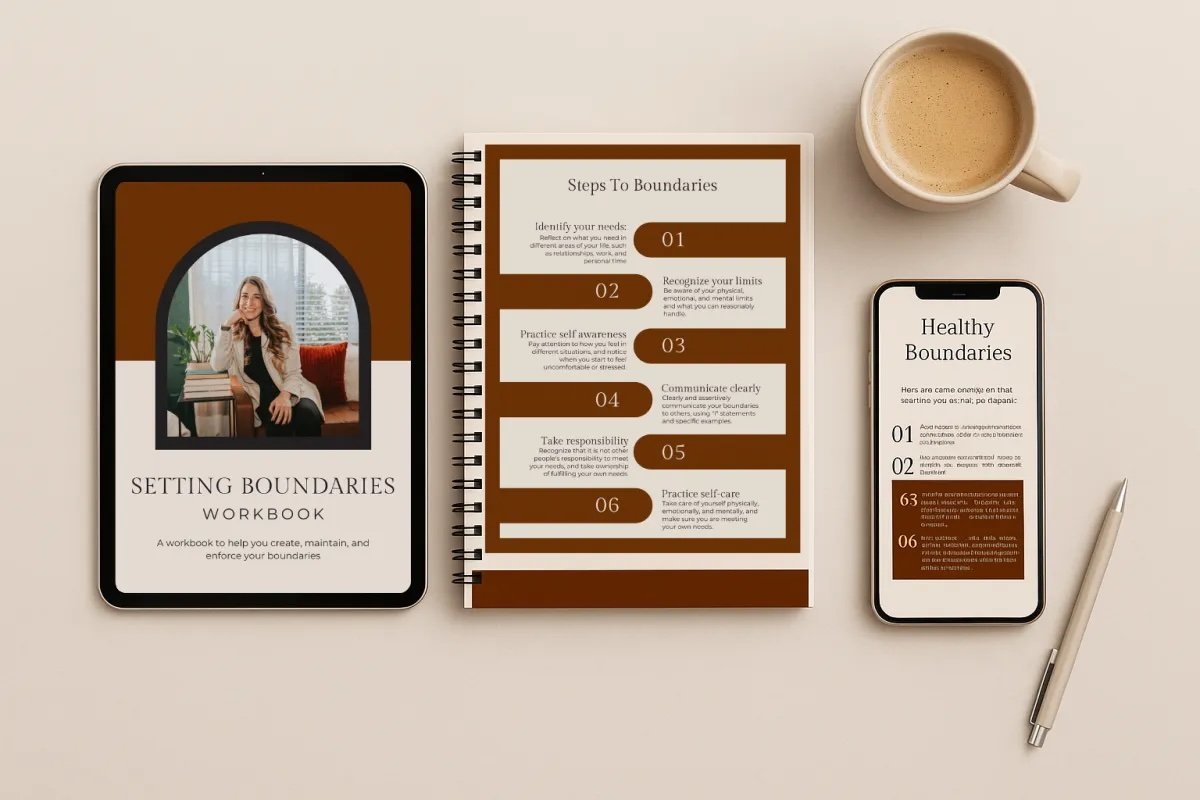
A styled flat-lay image featuring the Setting Boundaries Workbook by Racheal Turner, shown across a tablet, spiral workbook, and phone alongside a coffee. This image represents practical tools for learning healthy boundaries, nervous system regulation, and emotional healing through therapy and self-guided work.
Your Nervous System Can Be Re-Trained
The good news?
Your nervous system is adaptable.
With the right tools, support, and practice, you can begin to feel safe enough to:
speak up
take up space
disappoint people
set limits without panic
break generational patterns
This is where intentional nervous system regulation becomes essential.
Research shows that grounding techniques, mindfulness, breathwork, and somatic therapy help the body shift from survival to safety - allowing healthier relationship patterns to emerge.
A helpful overview can be found here:
A Resource to Help You Begin: The Setting Boundaries Workbook
If you’re ready to start setting boundaries that feel grounded, not guilt-ridden, my Setting Boundaries Workbook was created exactly for this purpose.
It includes:
✨ A breakdown of boundary types
✨ Steps for setting clear, compassionate boundaries
✨ Communication scripts
✨ Self-reflection exercises
✨ A personalized action plan
✨ Tools I use every week with clients
This guide bridges the gap between knowing you need boundaries and actually feeling safe enough to set them.
You can grab it here:
👉 Setting Boundaries Workbook
When You Need More Support
If you’re noticing that boundary-setting brings up fear, panic, numbness, or shutdown - you don’t have to navigate that alone.
At Turning Point Counseling, our team specializes in:
trauma recovery
nervous system regulation
relationships & boundaries
anxiety
self-loss & identity work
We would love to support you in learning how to feel grounded, safe, and empowered in your relationships again.
👉 Learn more about therapy at Turning Point Counseling
👉 Book a consultation with our team
You deserve connection that doesn’t require self-abandonment and boundaries that feel like an act of love, not fear.